
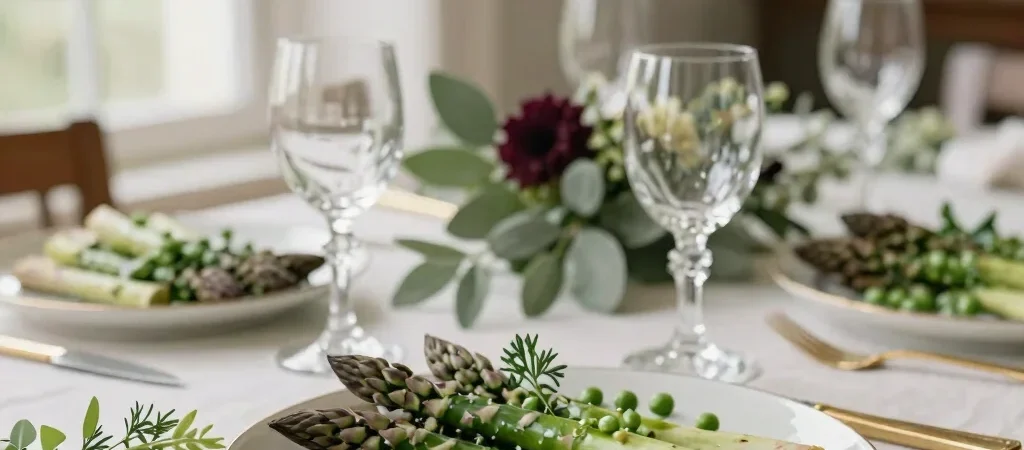
A wedding menu has to do more than look beautiful on paper. In spring, it should suit the day’s pace, make good use of seasonal produce, and give guests time to talk between courses.
Let the season set the tone
Asparagus, young peas, and tender herbs can bring freshness to a French reception menu without making every plate feel alike. Choose one ingredient to lead a course, then use supporting flavours—such as lemon, a light vinaigrette, or fresh chervil—to keep it clear and balanced.
Spring weather in France can change quickly, so avoid building the whole meal around a warm outdoor setting. A menu that works indoors as well as on a terrace gives the hosts more options if the evening turns cool or wet.
Make the courses work together
Think about contrast across the meal rather than choosing each dish in isolation. If the starter is crisp and green, a richer main course may feel welcome; if the main is slow-cooked or generously sauced, a bright, restrained first course can keep the meal from becoming heavy.
A dessert table can offer variety without adding another formal course. Strawberries, when they are in season, pair naturally with cream or a delicate pastry, while a modest selection of smaller sweets lets guests choose what they have room for.
Give the meal breathing room
The schedule matters as much as the dishes. Leave a comfortable pause after the ceremony and consider how speeches, photographs, and dancing will affect the time guests spend seated.
Before settling the menu, ask the caterer which elements can be prepared ahead and how service changes if the reception runs late. A thoughtful spring wedding menu is not the longest one; it is the one that lets the season, the setting, and the company come through.